The Real Price Tag on Peace of Mind: What Anxiety Treatment Actually Costs in 2024
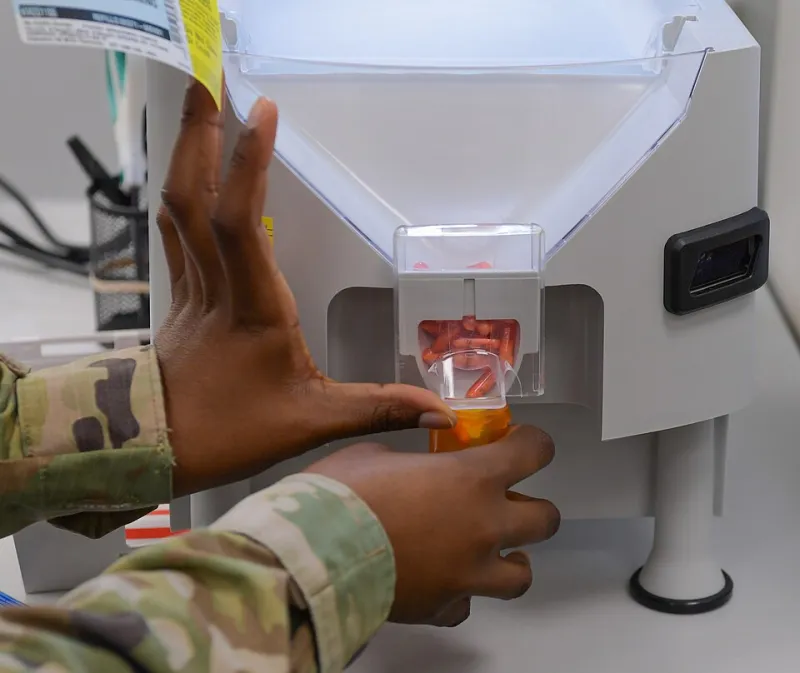
Photo: U.S. Air Force photo by Airman Trevor Calvert, Public domain, via Wikimedia Commons
Roughly one in four Americans who receive a prescription for a chronic condition never fill it — and price is one of the most commonly cited reasons. For anxiety medications, which often work best when taken consistently, an unexpected bill at the pharmacy counter can quietly derail treatment before it has a chance to help.
The good news: with a little planning, most patients can dramatically reduce what they pay. Here is how the money actually works.
Why the Same Prescription Can Cost $4 or $400
There is no single "price" for an anxiety medication. The amount you owe depends on four moving parts:
- The drug itself. Older generics like sertraline, fluoxetine, and buspirone are inexpensive and widely available. Brand-name drugs and newer medications carry much higher list prices.
- Your insurance design. Deductibles, copay tiers, and formulary placement all matter — sometimes more than the drug's sticker price.
- The pharmacy. Cash prices for identical pills can vary by 80% or more between chains, supermarkets, and independent pharmacies in the same town.
- Discount programs. Coupon services and manufacturer cards can undercut both cash and insured prices.
Because these four factors interact unpredictably, the only reliable way to know your cost is to price the prescription before you arrive at the counter.
Insurance Formularies: The Fine Print That Sets Your Copay
Most commercial plans sort drugs into tiers. A typical structure looks like this: Tier 1 generics carry the lowest copay, Tier 2 preferred brands cost more, and Tier 3 or specialty drugs cost the most. The catch is that formularies change annually. A medication that cost you $10 last January may sit on a different tier — or drop off the list entirely — this year.
Three formulary quirks worth knowing:
- Prior authorization. Some plans require your prescriber to justify a medication before covering it. If you skip this step, the claim denies at the counter.
- Step therapy. Insurers may insist you try cheaper options first, even if your doctor already knows which drug fits you best.
- Quantity limits. Plans often cap how many days' supply they will cover at once, which affects refill timing and copay math.
If a claim denies or your copay jumps unexpectedly, ask the pharmacist to run it as a formulary exception or call your plan's member services line. Exceptions are granted more often than patients realize.
The Discount Card Playbook
Free discount programs — GoodRx being the most recognizable name, alongside SingleCare, WellRx, and others — negotiate cash prices that frequently beat insured copays. A month of a common SSRI might run $10–$15 with a coupon versus $40–$75 through insurance.
A few practical rules for using them well:
- Compare before every fill. Prices shift monthly and vary by pharmacy location. Two minutes on a discount site can save real money.
- You usually can't combine them with insurance. By law, discount cards generally cannot be applied to an insured claim. If the coupon price is lower, ask the pharmacist to run it as cash instead.
- Watch the 90-day option. Many medications cost less per pill in a 90-day supply, especially through mail-order or warehouse pharmacies.
Manufacturer Savings and Patient Assistance Programs
Brand-name medications often come with manufacturer copay cards that can reduce out-of-pocket costs to as little as $5–$25 per fill. These cards are typically limited to commercially insured patients — people on Medicare or Medicaid are usually excluded by federal anti-kickback rules.
For uninsured and underinsured patients, two avenues are worth exploring:
- Patient assistance programs (PAPs) run by manufacturers can provide medications free or at steep discounts if you meet income criteria. NeedyMeds and the Medicine Assistance Tool are free directories for finding them.
- Community health centers and 340B pharmacies often dispense generics at reduced prices on a sliding scale.
Generic medications rarely have manufacturer coupons, but they rarely need them — the cash price is usually already low.
Budgeting for Treatment: A Practical Framework
If you are starting anxiety medication, build the cost into your monthly planning rather than treating each refill as a surprise:
- Price the script three ways — with insurance, with a discount card, and at a second pharmacy — before the first fill.
- Ask about generics up front. If your prescriber writes a brand name, it is entirely appropriate to ask whether a generic equivalent works for you.
- Sync your refills. Many pharmacies can align multiple prescriptions to a single monthly pickup, saving trips and sometimes fees.
- Flag affordability problems early. Pharmacists and prescribers can switch you to a lower-cost alternative, but only if they know cost is the barrier.
That last point deserves emphasis. Clinicians cannot fix a problem they never hear about. Surveys consistently show that patients often skip doses or abandon prescriptions without telling anyone why — a pattern sometimes called "financial toxicity" in prescribing. Mentioning that a copay is unmanageable is not an awkward confession; it is clinically relevant information.
The Bottom Line
Effective anxiety treatment should not require financial guesswork. Between generic options, discount programs, and assistance resources, the vast majority of commonly prescribed anxiety medications can be obtained for a manageable monthly cost — provided you take ten minutes to compare prices before you pay.
The pharmacy counter is a marketplace, and you are allowed to shop it like one. Your peace of mind is worth the homework.