The Dispensary and the Pharmacy: What Patients Should Understand Before Mixing Cannabis With Anxiety Treatment

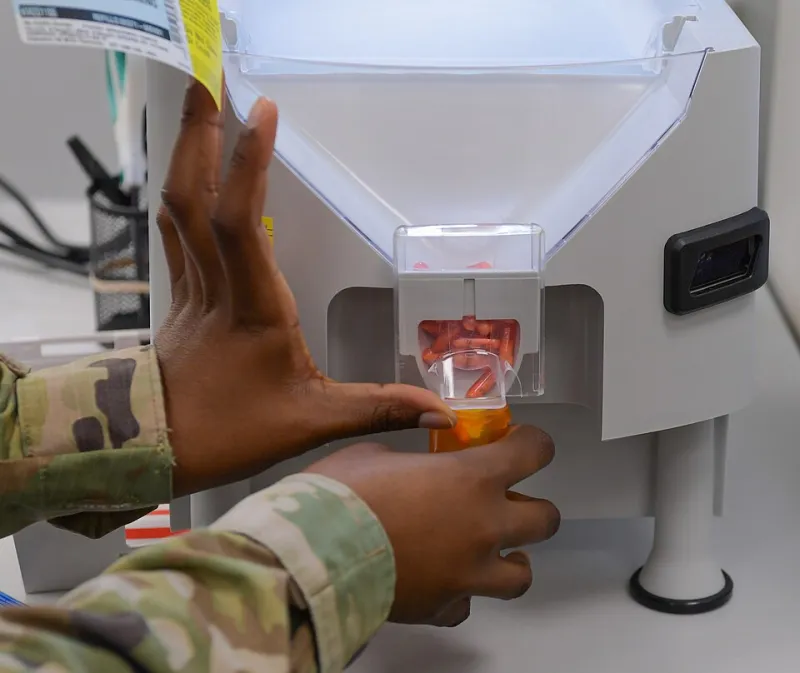
Photo: Biswarup Ganguly, CC BY 3.0, via Wikimedia Commons
Walk into a licensed dispensary in California, Michigan, or New York and you'll find shelves of products labeled for relaxation, stress relief, and sleep. Meanwhile, roughly one in five American adults now lives in a state where recreational cannabis is legal, and surveys consistently show that many people with anxiety conditions use marijuana — sometimes telling their doctors, often not.
That silence is the problem. Not because prescribers are judgmental, but because cannabis interacts with anxiety medications in ways patients deserve to understand before deciding what goes in their bodies.
What the Research Actually Shows
The honest answer about cannabis and anxiety is: it depends on the compound, the dose, and the person.
THC — the intoxicating component — shows a dose-dependent relationship with anxiety. Low doses may produce relaxation in some users; higher doses are associated with increased anxiety, paranoia, and, in vulnerable individuals, panic attacks. Large observational studies have linked heavy, long-term THC use to worsening anxiety symptoms rather than relieving them. People with panic disorder or a personal or family history of psychosis face elevated risks and are generally advised to avoid high-THC products entirely.
CBD, by contrast, has generated genuine scientific interest. Some clinical trials suggest modest anxiolytic effects at specific doses, though research quality remains uneven, product labeling is notoriously unreliable, and the CBD gummies sold at gas stations frequently contain far less — or far more — CBD than advertised.
The Interaction Risks Your Prescriber Wishes You'd Mention
Cannabis is metabolized by the same liver enzyme system — CYP450 — that processes many common medications. CBD in particular can inhibit these enzymes, potentially raising blood levels of drugs like fluoxetine, buspirone, and certain benzodiazepines.
Combining cannabis with benzodiazepines such as alprazolam or lorazepam compounds sedation, impairing memory, coordination, and judgment. With alcohol added, the effect multiplies further. Patients on SSRIs generally face fewer dramatic interactions, but additive side effects — dizziness, rapid heartbeat, cognitive fog — are commonly reported.
There's also the substitution question. Patients who quietly replace prescribed treatment with cannabis sometimes return to care months later with worsened symptoms, having lost ground that takes time to recover.
Having the Conversation Without Fear
Here's what many patients don't realize: in nearly every state, disclosing cannabis use to your doctor carries no legal risk for a private adult. Prescribers are bound by confidentiality, and their goal is safety, not judgment.
A practical script: "I've been using CBD/THC occasionally — edibles, a few times a week. I want to make sure it's not interfering with my medication." That single sentence opens the door to adjusted dosing, interaction screening, and honest risk assessment.
If you use cannabis and take anxiety medication, watch for warning signs: escalating anxiety after use, unusual sedation, heart palpitations, or needing more of either substance over time. Any of these warrants a conversation with your prescriber.
The Bottom Line
Legalization has changed the law, not the pharmacology. Cannabis is a biologically active drug with real interactions, real variability, and real evidence gaps. For some patients, a clinician-supervised CBD trial may be reasonable. For others — particularly those on benzodiazepines or with panic histories — THC is a poor bet.
The most effective anxiety treatment is a coordinated one, where every substance you take is known to someone qualified to evaluate it. Your prescriber can't help with what they don't know about.